
The Concept of Neo-Sufism of Bediuzzaman Said Nursi (1877-1960)
Mohammad Yahya, Norullisza Khosim, Muhammad Faiz, Ahmad Zainuri
Article Access
Open in Open Journal
View full article
Abstract
This research discusses the concept of Modern Sufism or Neo-Sufism through the perspective of Bediuzzaman Said Nursi, a great thinker from Turkey in the 20th century. Neo-Sufism is a modern development of traditional Sufism that seeks to answer the challenges of globalization, identity crisis, and materialism in the modern era. Nursi through his magnum opus, Risale-i Nur, introduced a spiritual approach that is relevant to the context of contemporary society, emphasizing the importance of integrating spirituality in everyday life. Nursi's main ideas in Sufism include a new understanding of clairvoyance, the concept of ikram ilahi, shortcuts to ma'rifatullah, and interfaith dialog as part of efforts to create social harmony. Nursi also emphasized that Sufism is not only a path to personal closeness to God, but also a means of building inclusive communities and contributing to social welfare. Through his views, Nursi offers a new perspective on Sufism that is more open, rational and in tune with modern values, without losing the essence of traditional Sufism.
Article Information
Journals
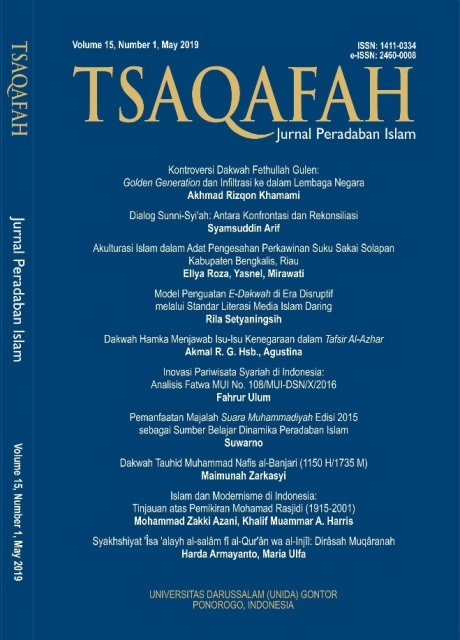
TSAQAFAH
Year
2025
Publish Date
26 Nov 2025