
Reconstructing Fatherhood in Islamic Law: A Fiqh al-Usrah and Qirā’ah Mubādalah Perspective on Relational Justice in Muslim Families
Irzak Yuliardy Nugroho, Mufidah Ch, Ahmad Zayyadi, Imam Syafi’i, Hawa Hidayatul Hikmiyah, Abdul Hakim
Article Access
Open in Open Journal
View full article
Abstract
This article explores fatherlessness in Muslim families through Fiqh al-Usrah and Qirā'ah Mubādalah. It reinterprets Surah al-Nisā' [4]:34 (qawwāmūn) and al-Taḥrīm [66]:6 (Qū anfusakum wa ahlīkum nārā), shifting paternal leadership from hierarchical authority to reciprocal moral guardianship (ḥirāsah akhlāqiyyah mubādalahiyyah), thereby legitimizing shared spiritual responsibility when fathers are absent. The study identifies the moral and spiritual deficit caused by paternal absence particularly declining ṣalāh discipline and ethical formation among children as a critical disruption of Islamic family ethics. Using a qualitative-normative approach integrating classical fiqh, Qur'ānic exegesis, and gender hermeneutics, it demonstrates that Qirā'ah Mubādalah offers a reciprocal framework for redistributing spiritual responsibility. The Qur'ānic ethic of caring for orphans (yatāmā) found in Surah al-Nisā' [4]:2-10 and al-Duḥā [93]:9 provides the dalīl shar'ī (legal proof) for mothers or communities to assume paternal religious roles (wilāyah ta'dībiyyah) when fathers are absent. This collective guardianship is grounded in maqāṣid al-sharī'ah, prioritizing preservation of faith (ḥifẓ al-dīn) and lineage (ḥifẓ al-nasl) over rigid gender roles. The study introduces relational justice ('adālah 'alāqiyyah) as an advancement beyond classical fiqh's transactional justice. While classical family law prioritized formal equity (inheritance, nafaqah, procedural fairness), it overlooked emotional labor ('amal 'āṭifī), caregiving (ri'āyah), and spiritual mentorship (tarbiyah rūḥiyyah). Relational justice mandates these as equally binding religious duties (farā'iḍ dīniyyah) shared between parents, ensuring that when one fails spiritually, the other gains full theological authority to lead, supported by communal accountability (mas'ūliyyah jamā'iyyah). The study concludes that Qirā'ah Mubādalah renews Fiqh al-Usrah by legitimizing shared moral leadership, redistributing patriarchal spiritual authority, and strengthening Muslim families' ethical foundations through reciprocity, emotional care, and functional competence.
Article Information
Journals
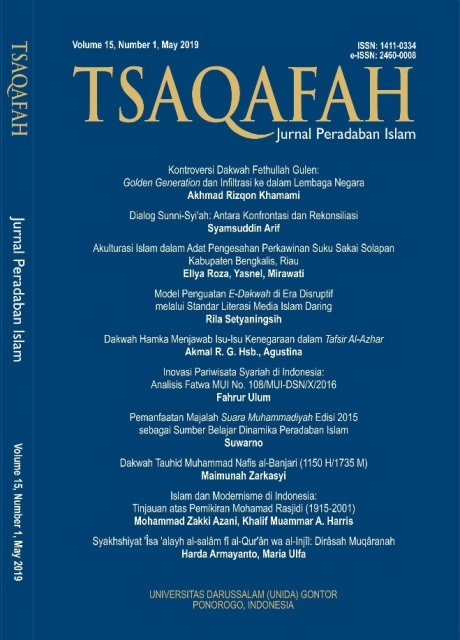
TSAQAFAH
Year
2025
Publish Date
03 Dec 2025